
【Academic Report】74th Session of "CHEN Bangjie Forum" Ecological Adaptation and Evolution of Gut Microbiota in Plateau Pikas
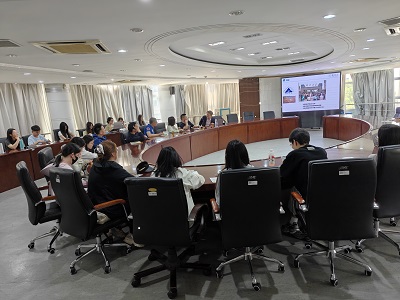
The 74th session of "CHEN Bangjie Forum" was successfully held April 18, 2025 at School of Life Sciences, Nanjing Normal University. Professor LI Huan, Director of the Institute of Microbiology Frontier and Big Health of Lanzhou University, gave an academic lecture entitled "Ecological Adaptation and Evolution of Gut Microbiota in Plateau Pikas". The seminar was hosted by Professor Li Hong, with active participation from faculties and graduate students. The event also attracted colleagues from Nanjing Agricultural University for academic communication.
In this seminar, Professor Li first introduced his research background: Plateau pikas (Ochotona curzoniae) exhibit unique anti-predation strategies, foraging behaviors, reproductive tactics, and habitat selection mechanisms, demonstrating remarkable adaptability to the harsh high-altitude environment of the Qinghai-Tibet Plateau characterized by cold temperatures and hypoxia. This includes gut microbiota adaptation, which plays vital roles in food digestion, energy metabolism, and immune function. Based on this foundation, Professor Li's team proposed three key scientific questions: (1) What factors influence the diversity of gut microbiota in plateau pikas? (2) How does gut microbiota help plateau pikas adapt to high-altitude environments? (3) What is the relationship between gut microbiota evolution and host evolution in plateau pikas?
Professor Li then elaborated on his team's research findings across ten dimensions: 1. Composition and diversity of gut microbiota in plateau pikas. 2. Microbial diversity variations across different digestive tract regions. 3. Correlation between gut microbiota diversity and dietary diversity. 4. Relationship between gut microbiota diversity and host population density. 5. Interactions among gut, blood, and ectoparasite microbiota. 6.High-altitude adaptation mechanisms of gut microbiota. 7. Seasonal adaptability of gut virome. 8. Ecological trade-offs in antibiotic resistome. 9. Evolutionary connections between gut microbiota and host. 10. Role of nitrogen-fixing bacterial communities in host evolution.
In conclusion, Professor Li summarized that plateau pikas adapt to high-altitude energy demands through enhanced gut microbial diversity, glycoside hydrolase activity, and fermentation capacity (evidenced by high SCFAs and cellulase activity). Their cellulose degradation system shows convergence with lagomorph microbiomes but carries high-risk antibiotic resistance genes and pathogens requiring monitoring. While gut microbiota partially reflects evolutionary relationships, nitrogen-fixing bacteria present exceptions.
At the end of the seminar, participants raised questions about related research, and Prof. Li addressed these questions in details. The faculties and students benefited a lot from this seminar.