
【Academic Report】The 79th ‘Chen Bangjie Forum’: AMPK regulates energy homeostasis under oxidative stress and the molecular mechanism of detoxification metabolism and reproduction trade-offs
At the invitation of Prof. Li Bin from School of Life Sciences, Nanjing Normal University, Prof. Wang Jianjun from Yangzhou University gave a lecture entitled ‘AMPK regulates energy homeostasis under oxidative stress and the molecular mechanism of detoxification metabolism and reproduction trade-offs’ on 15th May 2025 in the Round Room on the third floor of Xingzhi Building, Xianlin Campus, Nanjing Normal University. The lecture was hosted by Prof. Li Bin from School of Life Sciences, and teachers and students from all related majors actively participated in the lecture.
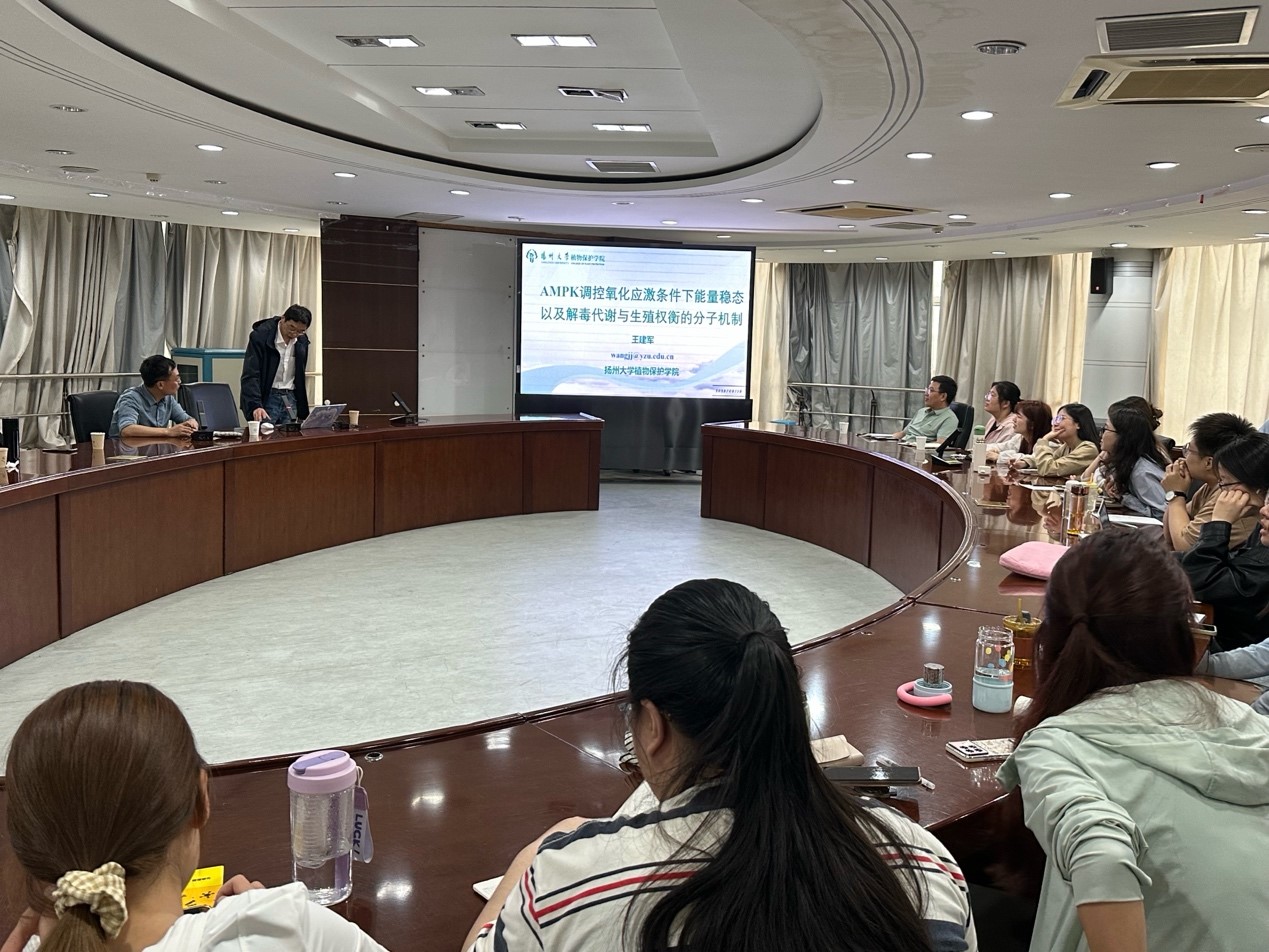
In this presentation, Prof Wang Jianjun introduces the molecular mechanism of adenylate-activated protein kinase (AMPK) in regulating energy homeostasis under oxidative stress, the functional similarity between AMPK and arginine kinase (AK) in energy metabolism and oxidative stress, and the synergism between the two in regulating energy homeostasis under oxidative stress. Regulation under oxidative stress conditions. FOXO (Forkhead box O) is not only involved in the regulation of energy metabolism, but also mediates the regulation of cellular energy homeostasis in insects. Under oxidative stress, TcFOXO can directly regulate the expression of TcAK1 and TcAK2, and TcAMPK promotes its nuclear translocation by phosphorylating TcFOXO, so the two interactions can mediate the induced expression of TcAKs by oxidative stress to satisfy the ATP energy demand of insects.
AMPK regulates CncC to mediate the trade-off between detoxification metabolism and reproduction. TcAMPK affects reproduction by regulating the hydrolysis of ecdysteroids and juvenile hormones, and the interaction between AMPK and CncC phosphorylates the latter and promotes its nuclear translocation, which in turn regulates detoxification metabolism as well as expression of hormone synthesis and metabolism related genes to mediate the detoxification metabolism-reproduction trade-off. The results of Prof Wang's research provide profound insights into the reproductive trade-offs in insect immunity.
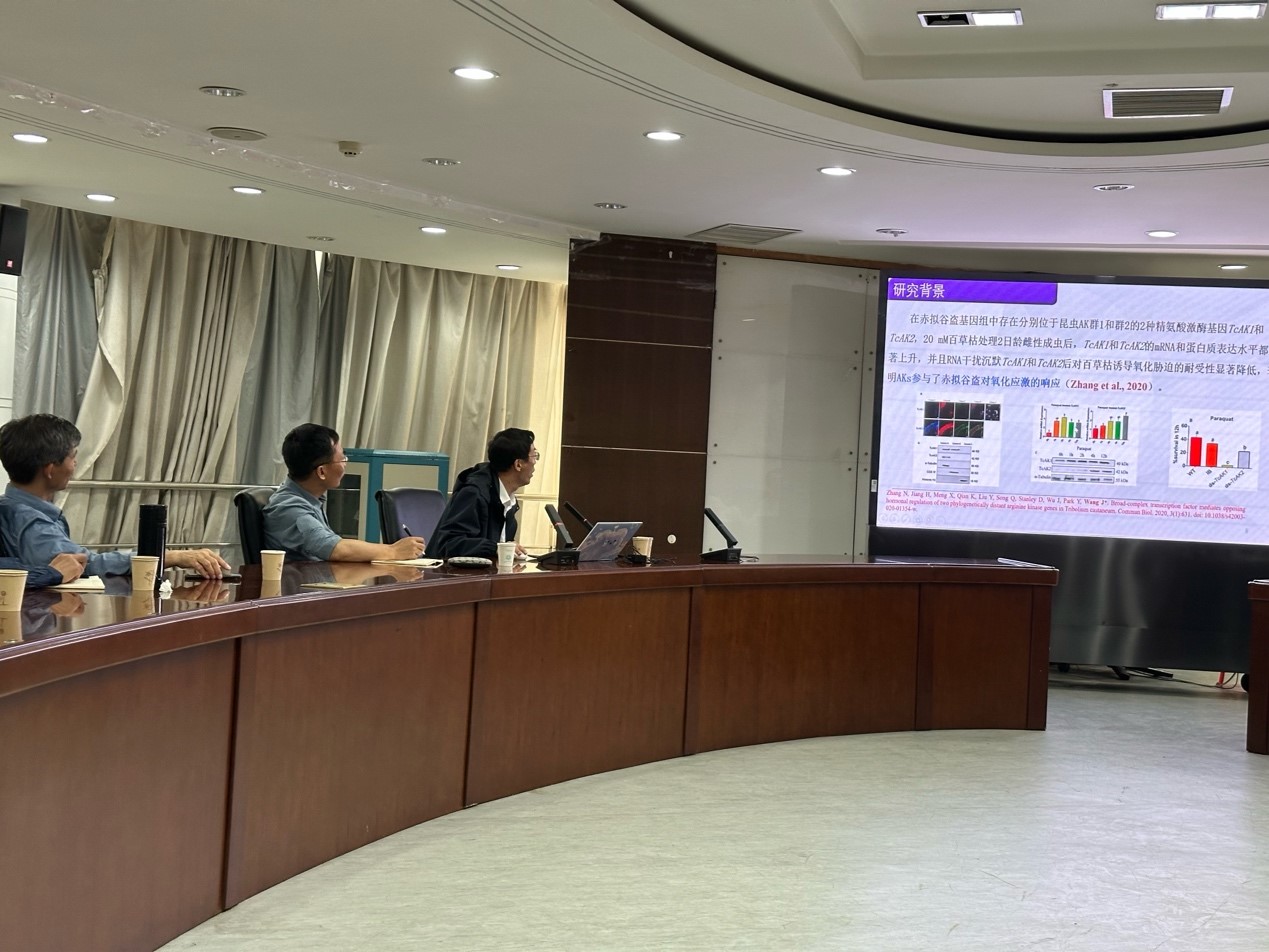
After the report, the participating teachers and students had a warm discussion and exchange around the report content of Professor Wang Jianjun, he answered the questions in detail, the atmosphere was warm, and everyone benefited a lot. The presentation was successfully concluded with warm applause.