
【Academic Report】The 84th “Chen Bangjie Forum”: Taxonomy and the Formation and Conservation of Biodiversity
On the afternoon of June 30, 2025, at 15:00, the 84th “Chen Bangjie Forum” of the College of Life Sciences was successfully held in the round conference room on the third floor of Xingzhi Building. At the invitation of Professor Zhong Bojian, Dean of the College of Life Sciences of Nanjing Normal University, Researcher Wang Wei from the Institute of Botany, Chinese Academy of Sciences, brought an academic lecture on “Taxonomy and the Formation and Conservation of Biodiversity” to the audience. The lecture was chaired by Professor Zhong Bojian, with active participation from teachers and students.
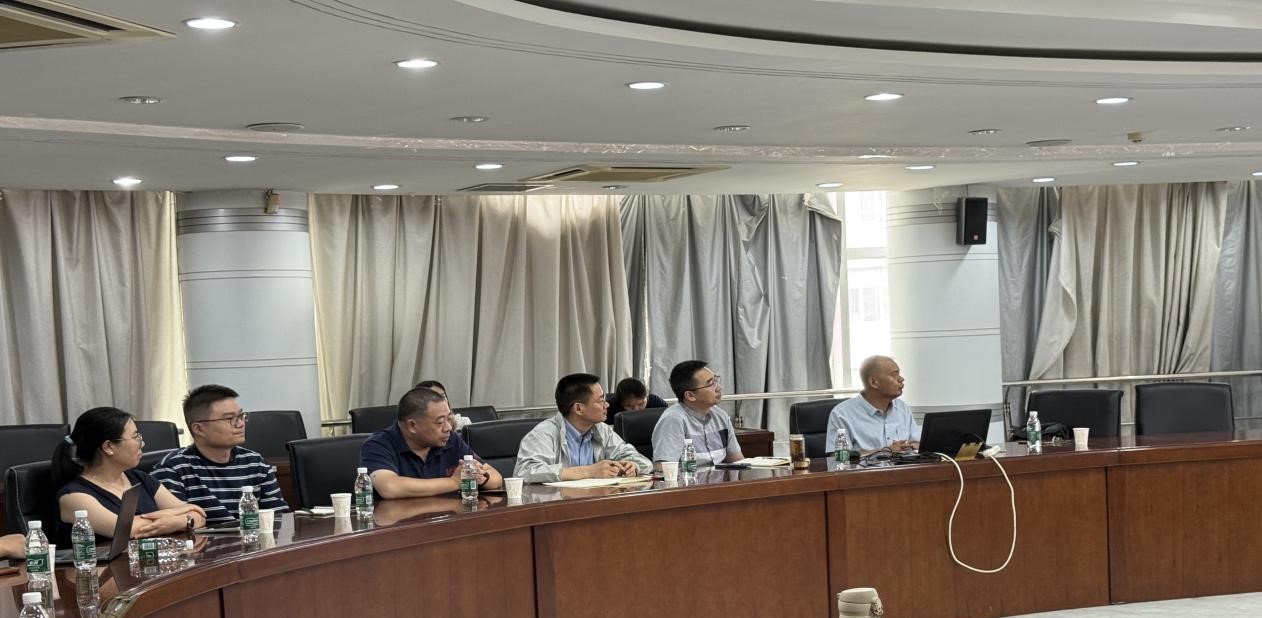
In this lecture, Researcher Wang Wei introduced the concept of taxonomy and its relationship with geographic distribution, stating that taxonomy is a historical summary of biodiversity evolution, and geographic distribution is an extension of taxonomic research. Subsequently, Researcher Wang elaborated on the research content from two aspects: 1) the phylogeny and taxonomy of Ranunculales, including the phylogeny relationship of Ranunculales, as well as the molecular identification and conservation of Sinofranchetia chinensis. 2) the formation of East Asian biodiversity, covering the formation and conservation of biodiversity in East Asian subtropical regions, the Qinghai-Tibet Plateau, and the Qinghai-Tibet Plateau-Arctic region. Finally, Researcher Wang summarized the significance of the research, which clarified the disciplinary development direction of “integrative taxonomy based on phylogenetic principles” and established a unified research method combining “species differentiation-floristic genesis-vegetation succession-earth evolution”.

After the lecture, faculty and students in attendance posed questions to Researcher Wang regarding the related content, and he provided detailed answers. This lecture thoroughly explored the research methods of taxonomy and the evolution of East Asian organisms, deepening the understanding of faculty and students regarding taxonomy and biological evolution, and providing a clear direction for subsequent research.