
Blue Ocean Seminar (2026 Issue No. 2) | “The impact of different climate variability on early human dispersal and ecological adaptation”
On June 12, 2026, at the invitation of the School of Marine Science and Engineering, Nanjing Normal University, and the Jiangsu Provincial Key Laboratory of Marine Land Environmental Evolution and Ecological Construction, Dr. Zhong Yi — Research Associate Professor at the Institute for Advanced Study in Oceanography, Southern University of Science and Technology — gave an academic lecture entitled "The Impact of Different Climate Variability on Early Human Dispersal and Ecological Adaptation" to the faculty and students of the school. The lecture was presided over by Professor Yang Yang, Associate Dean of the school.
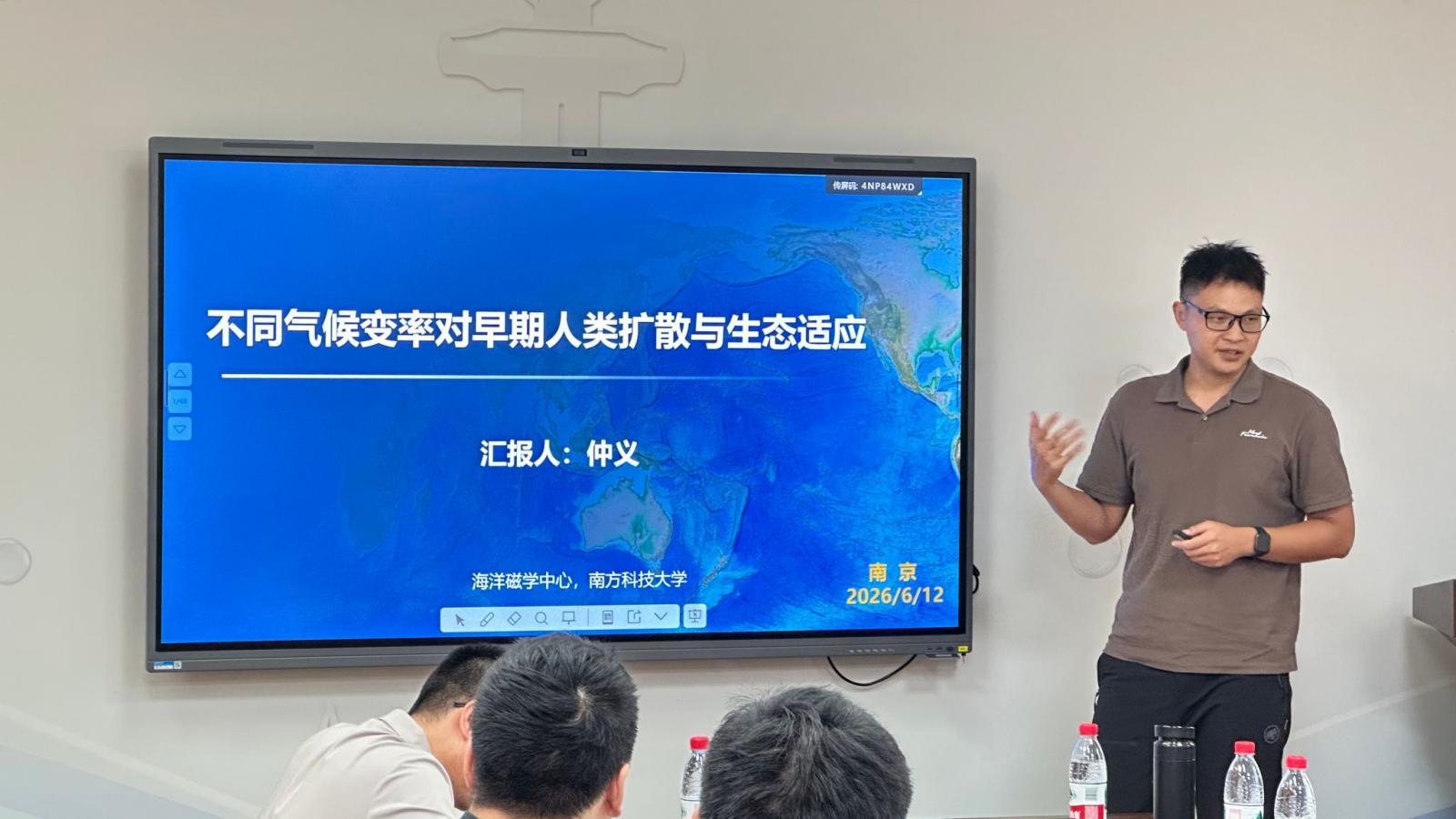
At the outset of his presentation, Dr. Zhong Yi challenged the traditional linear perspective on human dispersal by situating the discussion within the broader framework of global climate change and human–environment co-evolution, and proposed the "Variability Selection Hypothesis." He argued that Pleistocene climate variability — particularly the rapid reorganization of hydrological and vegetation patterns — profoundly shaped early human migration routes, population expansion, and isolation by modulating resource availability and ecological connectivity, and even determined the spatiotemporal rhythm of population bottlenecks and extinctions.
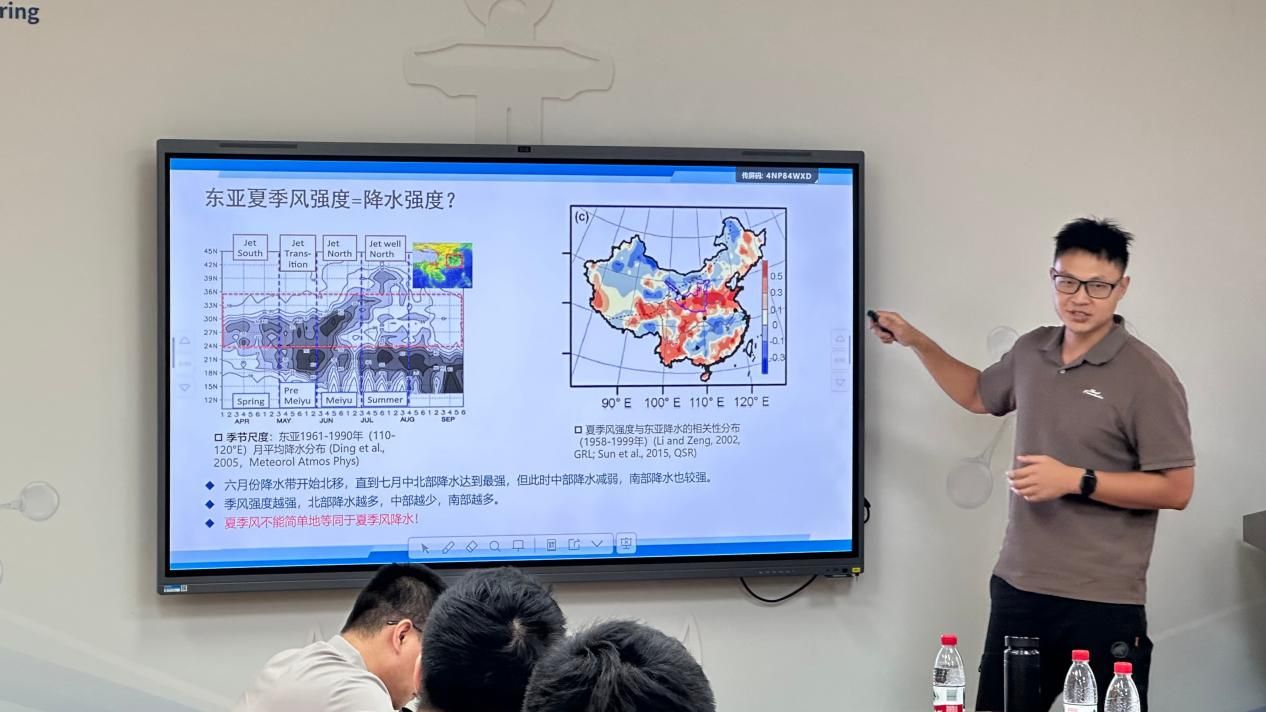
During the lecture, Dr. Zhong systematically compared the divergent driving mechanisms of climate variability on human dispersal between low-latitude and high-latitude regions. In low-latitude areas, orbital-scale variations in eccentricity, precession, and obliquity dominated the dry–wet cycles of African monsoon precipitation, thereby controlling the opening and closing of the Saharan "green corridors," which functioned as a "gateway" for Homo sapiens migrating out of Africa. High-eccentricity humid phases (e.g., MIS 7 and MIS 5) provided continuous habitats for human populations, while low-eccentricity arid phases (e.g., MIS 6 and MIS 4–2) led to habitat fragmentation, forcing populations to disperse in multiple directions. In high-latitude regions, the interplay of glacial–interglacial cycles, thermohaline circulation, and atmospheric river processes collectively shaped moisture and vegetation gradients across North America and the Bering Sea region, influencing the survival and turnover of megafauna, and thereby setting the ecological stage for early human adaptation strategies.
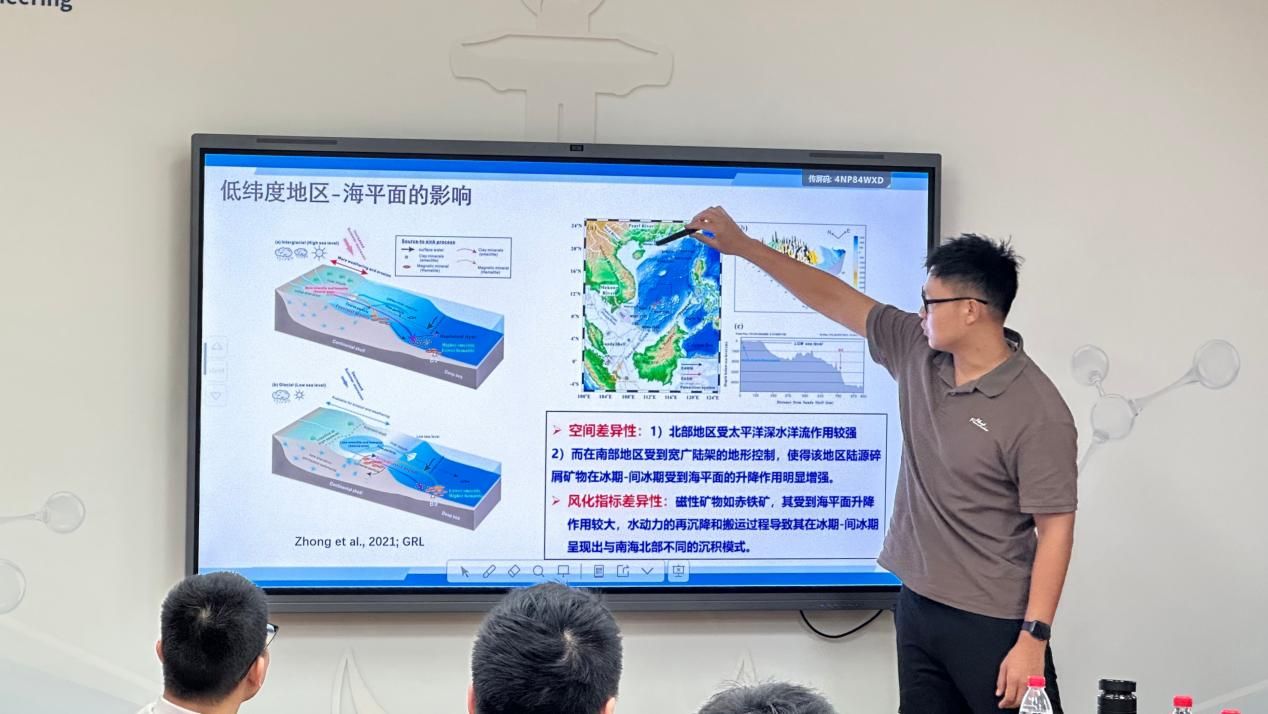
Dr. Zhong Yi also highlighted the methodological innovations of his team in interdisciplinary marine magnetics research, including the use of magnetic mineral assemblages, goethite and hematite fluxes, pollen analysis, and isotopic provenance tracing to reconstruct paleoclimate sequences in key low-latitude regions (the South China Sea and the Bay of Bengal) and high-latitude regions (the Bering Sea and the North Pacific). He pointed out that environmental magnetism, with its non-destructive, rapid, and sensitive advantages, plays an irreplaceable role in establishing high-resolution chronological frameworks, identifying redox events, and tracing monsoon precipitation and dust activities. It thus provides solid technical support for "archaeoclimatology" — the integrated study of paleoclimatology, paleoecology, and paleoanthropology.
At the conclusion of the lecture, Dr. Zhong integrated pollen assemblage data, along with the spatiotemporal distribution of mammalian and early human remains from North America since the last deglaciation, to explore the coupling relationships among climate, human populations, and biological communities. He emphasized that understanding past human adaptation patterns to climate variability can help assess societal vulnerability and resilience in the context of contemporary global change, and provide historical references for future ecological conservation and disaster response.
During the interactive session, Dr. Zhong engaged in in-depth discussions with faculty and students on topics including orbital forcing mechanisms, the applicability of magnetic proxies, the synergies and differences between Asian and African monsoon systems, and the integration of models with proxy data. The session was marked by a lively atmosphere, and attendees expressed that the lecture offered both broad vision and cutting-edge content, deepening their understanding of Earth system evolution while also inspiring new thinking on human adaptation strategies under current global change. The college leadership expressed sincere gratitude to Dr. Zhong for his insightful presentation and looked forward to further strengthening academic exchanges and collaboration with the Institute for Advanced Study in Oceanography at Southern University of Science and Technology.
Dr. Zhong Yi is a specially appointed talent under Shenzhen's "Pengcheng Peacock Plan." He received his Ph.D. in Marine Geology from the South China Sea Institute of Oceanology, Chinese Academy of Sciences, in 2017. His research primarily focuses on marine magnetism and environmental change, dedicated to establishing high-precision paleomagnetic chronological frameworks, developing marine magnetic proxy methods, and achieving significant results in land–ocean coupling, global carbon cycling, and high–low latitude interactions. As first or corresponding author, he has published over 20 SCI papers in leading geoscience journals including Nature Communications, Communications Earth & Environment, Geophysical Research Letters, Quaternary Science Reviews, and Science Bulletin, along with over 60 co-authored publications. He has led projects funded by the National Natural Science Foundation of China (Young Scientists Program and General Program) and sub-projects of the Ministry of Science and Technology's Key R&D Program. He currently serves as a Young Editorial Board Member for Innovation Geoscience and the Chinese Journal of Applied Oceanography, and participated in the International Ocean Discovery Program (IODP) Expedition 403 in 2024.