
Blue Ocean Seminar (2026 Issue No. 3) | “Land–Sea Integrated Environmental Biotechnology: Anaerobic Digestion and Microplastic Control Frontiers”
On July 4, 2026, at the invitation of the School of Marine Science and Engineering, Nanjing Normal University, and the Jiangsu Provincial Key Laboratory of Marine Land Environmental Evolution and Ecological Construction, Dr. Zhu Xiaowen — Assistant Professor at Arizona State University London (ASU London) and University College London (UCL) — gave an outstanding academic lecture entitled " Land–Sea Integrated Environmental Biotechnology: Anaerobic Digestion and Microplastic Control Frontiers " to the faculty and students of the school. The lecture was presided over by Professor Yang Yang, Associate Dean of the school.
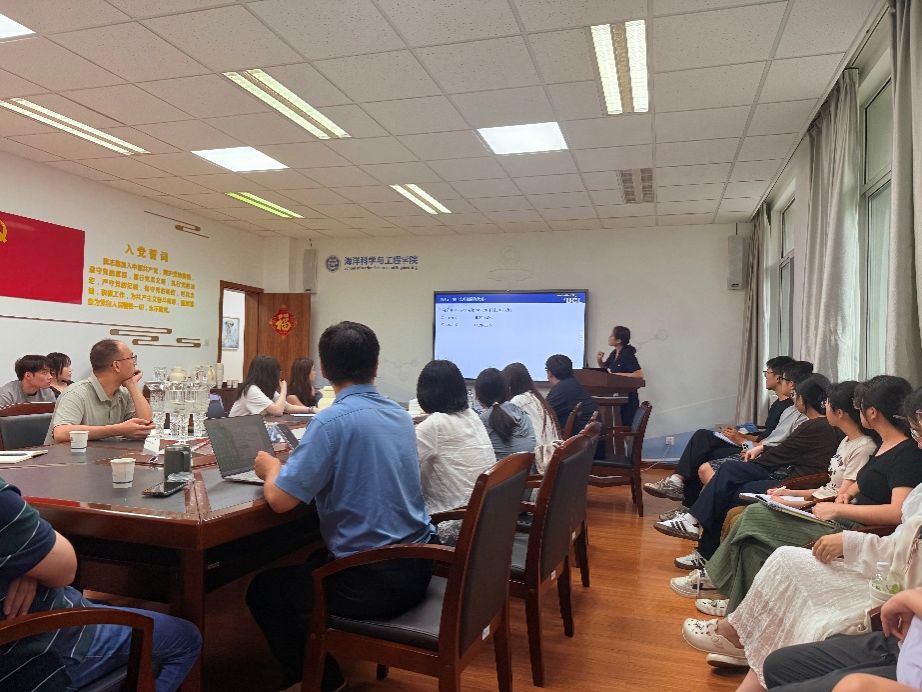
Dr. Zhu Xiaowen began with the core question of "why we should focus on land–sea integration." She cited data indicating that 70–80% of marine pollutants actually originate from terrestrial activities, emphasizing the urgency of breaking down the land–sea divide to achieve coordinated governance. She then extended the discussion from wastewater pathology to explore the cutting-edge topic of "what information can be retrieved from wastewater." Dr. Zhu pointed out that wastewater can be used not only for monitoring drug abuse and antibiotic resistance, but also, through environmental DNA (eDNA), RNA, and metatranscriptomics, to obtain population-level health profiles for diseases such as Huntington's disease and Alzheimer's disease, thereby providing a novel surveillance tool for urban public health security.
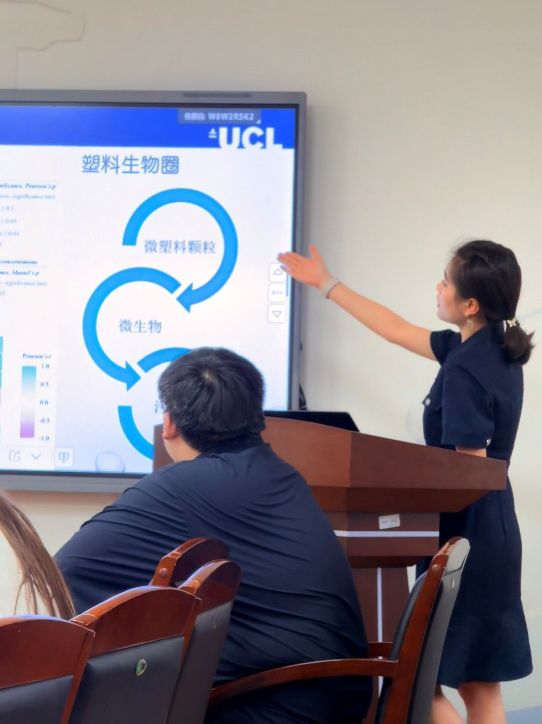
During the lecture, Dr. Zhu systematically reviewed microplastic pollution and its removal mechanisms in wastewater treatment systems. She noted that microplastics undergo mechanical, microbial, and photodegradation under weathering forces, entering the biosphere via sedimentation and surface adhesion, and ultimately posing potential health risks to humans and wildlife through the food chain. Drawing on her team's latest research (Iskandarani et al., 2026), she demonstrated that various treatment processes — including aerobic granular sludge (AGS), oxidation ditch (OD), membrane bioreactor (MBR), and moving bed biofilm reactor (MBBR) — can achieve microplastic removal efficiencies of 80–93%. The study also found that microplastics in wastewater are predominantly composed of acrylic (36%), polyethylene (27%), styrene (18%), and polyisobutylene (18%), and that their concentration–size distribution correlates significantly with conventional water quality parameters such as TSS, COD, TN, and NH₄⁺.
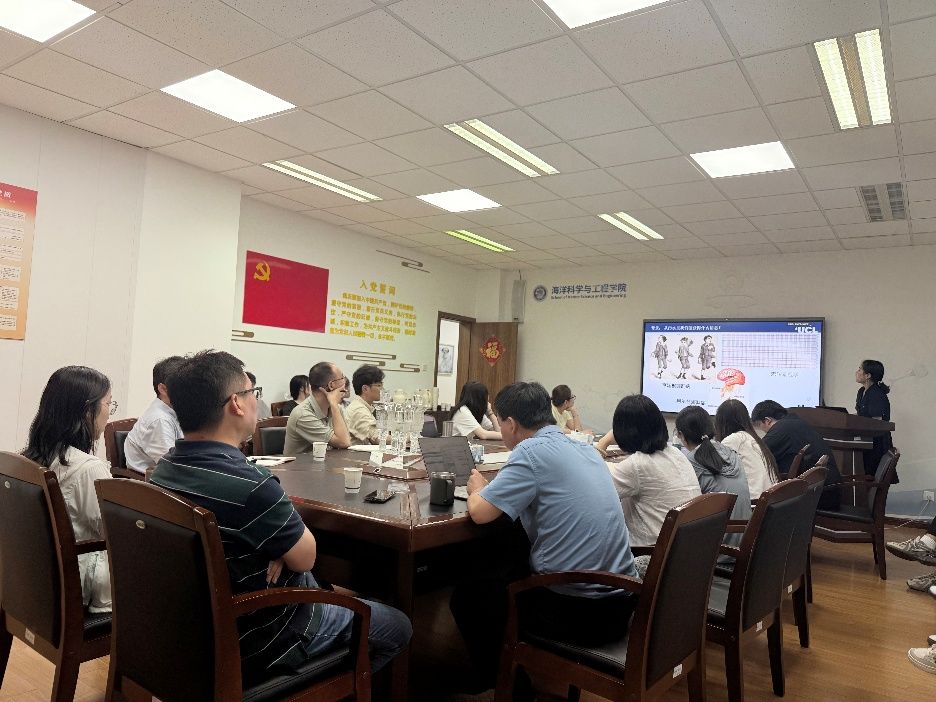
Dr. Zhu also highlighted her team's breakthrough findings on anaerobic digestion and the use of nano-additives for microplastic pollution control. In municipal solid waste treatment, biodegradable waste accounts for over 50%, and anaerobic digestion plays a key role in recovering biogas (CH₄, CO₂, etc.) and digestate fertilizer. Addressing challenges such as acidification, oxidative stress (ROS elevation), and methanogen competition caused by system overloading, Dr. Zhu elaborated on the regulatory mechanisms of magnetic nanoparticles (MNP) in anaerobic digestion. Her research shows that adding 10–25 mg/L of MNP effectively supplements trace elements, inhibits competing bacteria (e.g., NRB), significantly reduces oxidative stress, and suppresses undesirable H₂ release. Meanwhile, the nanoparticles facilitate direct interspecies electron transfer (DIET), substantially improving microbial interactions, enhancing system stability and resource recovery efficiency, and promoting total solids reduction. Looking forward, Dr. Zhu discussed the future of environmental biotechnology under the land–sea integration framework, emphasizing the importance of life cycle assessment (LCA) and ISO 14040/14044 standards in evaluating the environmental sustainability of emerging technologies.